


It’s the time of year for signs, for burning twelve little strips of paper ciphered with my unreadable handwriting in a Christmas Cookie candle, pulling tarot cards and wondering if I should read into the one that fell face first from the pile. Like a little turnover of the sheets or a recipe that says flip the salmon and cook until opaque, we expect this time of year to change us.
I’ve been listening to the podcast The Sacred (which has a British host, Elizabeth Oldfield, iykyk) and flushed from our dog walk this morning, I rushed inside wearing a baby in a gingerbread tutu (important) to write about the episode I had just listened to which features a one hour and forty minute conversation with London Times columnist and author Caitlin Moran.
In one scene (do podcasts have scenes?) she talks about how she got her start in her late teens writing scathing music reviews, which made her wildly popular and fast-tracked her career ladder. But a while into this trajectory, she wrote one with the conceit that she was at the band’s funeral (brutal) and waltzed into the office thinking she was on top of the world only for her eventual husband to pull her aside and say, “hey, that’s not you.” So, from then on, she started being the writer (and a person) who looked at something good and told people why it’s great. The host called this a “posture of hospitality” which sounds good on the tongue.
And so with my charcuterie in place (pronounced chart-eh-hoo-chie if you live in our house—nothing more hospitable than holiday leftover Blue Cheese spread), let me tell you about the good stuff in book publicity.
I’m back to handwritten notes. I tried the ipad, I tried a Kindle scribe, I tried the notes app, and I tried just typing into a Google doc while I read, but there’s nothing like generating strategy by hand as I’m reading. In the New Year, I’ll do a post on what my notes look like when I’m thinking about taking a book / author on board. I haven’t written Essay Atlas in a year, but you can catch a glimpse of how my mind works in maps there.
Grassroots still sells. Washington Post just wrote about the bestseller status of Theo of Golden which garnered little publicity (though it does have Simon & Schuster distribution which means it got into the hands of a lot of booksellers who could hand sell it). But what I really want to note here is that the author is older and the book is about an older man. It’s giving Tuesdays with Morrie or if The Friend wasn’t about mortality (then it wouldn’t be The Friend). I like to call these types: little nougats of wisdom (I’d also include Thursday Murder Club here). But it also points to something I’ve been eyeing for quite some time—hot girl bummer books, while fun, don’t have to be the whole moment or the only literary and upmarket books (besides “your mom’s book club would ‘read’ that” titles) that get publicity backing. Folks in my parents generation do two things really well: read and gossip. Meaning they have perfected the hand sell. (Good publicity is listening to your grandma try to convince you of something). I can’t tell you how many times I’ve turned something down (all evening, Trudy) only to leave with that thing in my hands because they weren’t taking no for an answer. Older folks, retirees, grandparents, are absolutely going to tell you about the last good book they read and they’re also shopping for everyone else. It’s not the horror that is trickle down economics, instead it’s the delightful trickle down generational lending library. I still have not read John Grisham (sorry dad), but I have taken Danielle Steel for a spin, and she really does write the book version of a unsatiating cheddar sour cream chip. You do have to eat the whole bag, or in this case finish the entire book.
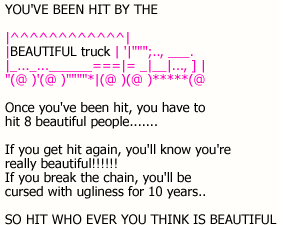
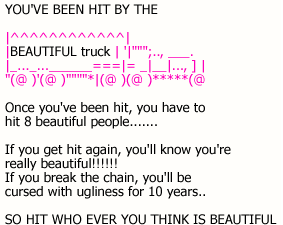
Blogging resurgence. Zine resurgence. Micro creators and communities. Personal recommendations. (I love a shelf talker. I almost always buy a shelf talker when I go into the bookstore. I also tend to argue with shelf talkers). Penpals. Listen, find me a book that I can use those eerie chain mail emails from AOL Instant Messenger days as a publicity strategy. “SEND TO TEN FRIENDS OR YOU’LL END UP AT THE BOTTOM OF A WELL.” A concept! A fear factor! A fairytale glimmer! A tiny bout of superstition and you’re sending to ten friends. I couldn’t take the risk, I shared and shared and shared. I’m ready to conceptualize, just find me the right book. (It might be Brittany Ackerman’s new novel. I’ll be in your inboxes next summer, people!). It’s the end of the “influencer era” (lol I wrote “influencer error” when I first typed this. Thanks, Sigmund.), and with that we see the return of blogging, zines, community batch-esque creating. When you think publicity in 2026, I want you to think “small batch,” which reads both intimate and exclusive and will help you face away from the junk and towards the niche.
I guess we can use it for good too, you don’t have to have an untimely death. Barnes & Noble is expanding, which means Amazon is not nearly as close to total dominance as they think they are. I believe in shopping Indie, but Barnes & Noble is a stopgap to Amazon, and it’s also much more available in places that may not have an independent bookstore (rural areas too!). I’ve also seen an explosion on threads of people who want to open bookstores. Mobile bookstores feel like they’re booming (I want one), so give the people what they want: a way to BROWSE.
Literary aesthetics. Put that flat lay away and start moving towards a (aspirational) literary lifestyle. This doesn’t necessarily mean any one thing, it can be: documenting a visually literary place, content where you talk to the camera, designing content (Reading retreats went through the stratosphere this year because they had strong design from the start and that’s PLEASING to the eye—check out Page Break as proof). The gals house of Pine State is always sending each other links to author websites that are compelling. Either how they describe their writing, the design of the page, the layout, the weirdness, and this is a part of that sort of zine culture I mention. Making things crafty and unique. I’ve been talking to Zoe about focusing energy on a “Pinterest book” this year, mostly to test out the platform because it’s an underrated book sales schema and we could do some interesting things with certain books over there (re: poetry and memoir especially).
We’ve now worked on a few middle grade books (almost always graphic novels or novels in verse, I like to make nothing easy for myself) and dare I say: adult books who want to garner support beyond legacy media should look at how children’s book publicity works. Because there isn’t a lot of legacy media for children’s books. There isn’t a lot of staple media at all, in fact. And so, children’s book publicity has a different focus, it’s people-fronted not media-fronted. I love this about working on children’s books and I want to take a few of the tactics from our experience with MG books for work on adult books. I’ll talk more about this in a later newsletter. (Maybe this is just me giving myself ideas).
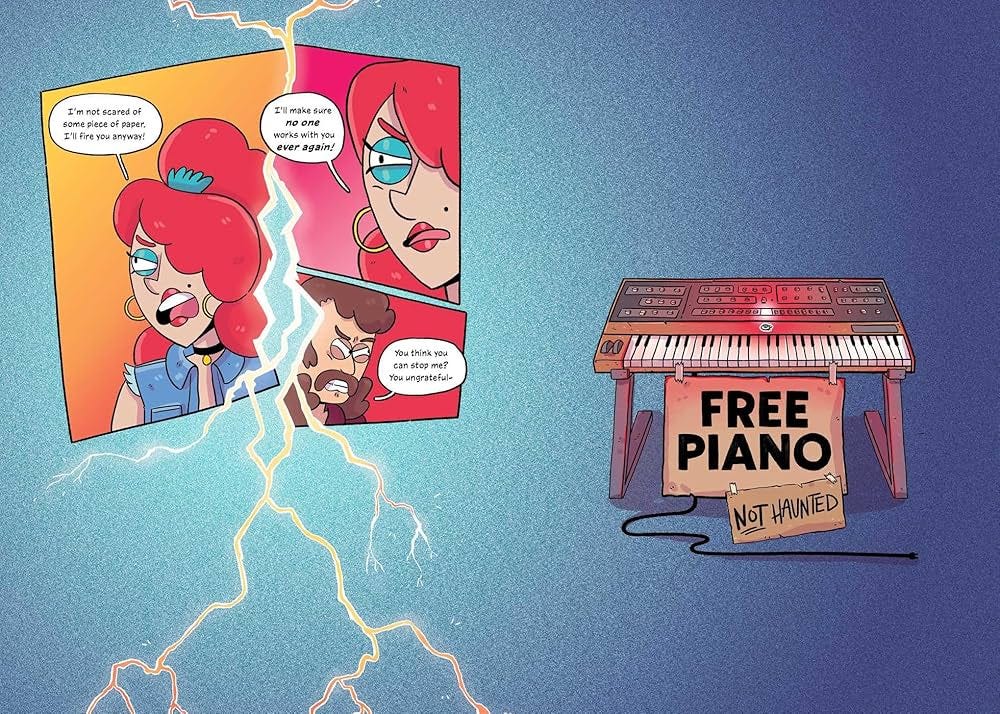
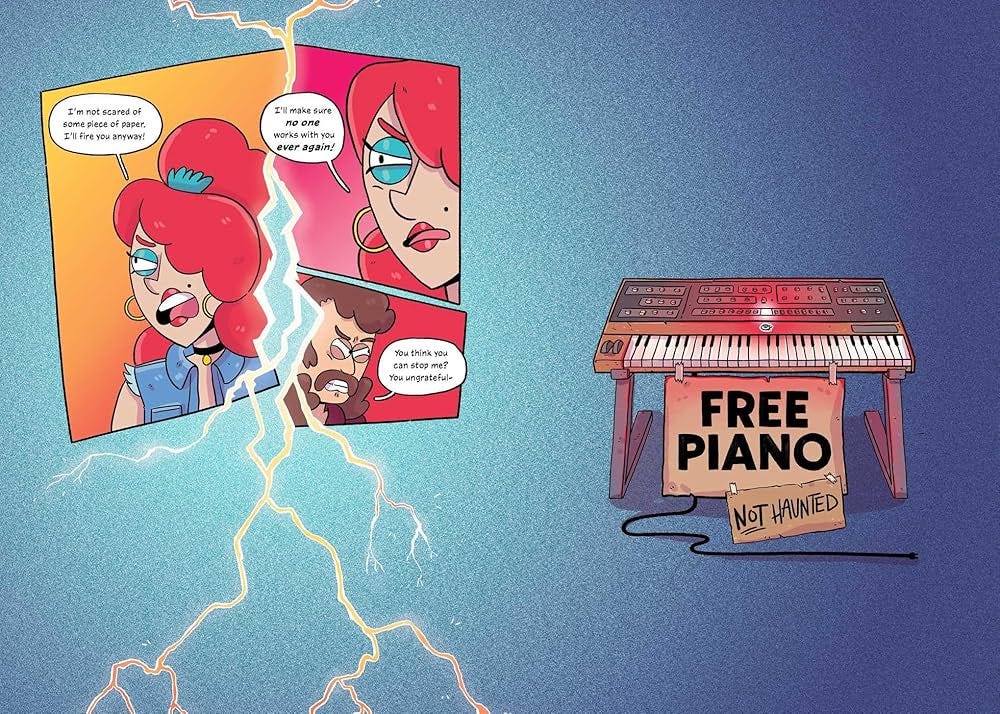
This is the MG book we worked on this year, I’m obsessed. Whitney Gardner’s FREE PIANO (NOT HAUNTED) I pay attention to Eli Rallo on Tiktok (literary dial) and I agree with her recent take on relatability being a myth (likability too!) and that audiences online want authenticity first and then aspirational or educational content. The aspirational only works with the authentic (especially being value-aligned, and especially when it comes to politics and human rights). This feels apt for authors who are taking their show on the interview road. Authentic means bringing the baggage with us, it means to strive against the “perfect answer” or the likability complex or whatever people mean when they say “right way to do something.” The strange, the curious, the hmmm…that will help you. We are a society hungering for what’s real across the spectrum, so remember that you’re a weirdo during the publicity cycle, and embrace it. I’ve been thinking a lot about the different personalities of my boys (it makes sense, follow the tangent). My first son is a star, everyone wants to know him, he is a bright, bold, storytelling showman. The other day he told his whole life story to a security guard at the museum and when I lost his brother shortly after, the security guard was like “oh yea, E, P’s little brother? They’re fast huh? P told me …” We had been at this museum … three hours and the team all knew P. My second son is the kid who says, “I want to go back inside.” He’s an artist, he’s moody, he’s got perfect comedic timing. He talks to every animal and cares about the little things. He’s got this face that you just know has flame behind it—ambitious, curious, masterminding a plan. He is also a star, he just keeps the flame in his chest. They’re both interesting and interested, but I have had to do some deep rethinking on what I wanted my children to be (in all cases). So that they could … be. Just be. And that’s what I want for authors too—you don’t have to be a package, you can be a person.
Ask this book will fail and human research will prevail. As you know, I’m the tangent’s biggest fan. I need bumper stickers. But there’s something happening online with human research (in a non-academic way, though academically-coded) that is about to pop off for books. Personalized syllabi, thesis journals, instead of “what happened on …” show summaries, we’ll have analysis that moves beyond Tiktok to magazines and pop culture sites—analysis that brings narrative and pop culture together. Analysis with a focus on creating good questions rather than finding simple answers. What Amazon thinks readers want (ask this book) will be met not with easy slop, but with sleuthing. Readers will be looking for less ease, focusing their energy on the act of looking itself: research, note-taking, analysis, culminations or writing essays and videos that bring many things together. All good for book culture at large and people who want a return of thinking deeply.
Creating community still dominates, which is near-total in the author’s control (and can be a long game play). I’m not saying you need 5k followers on Instagram, I’m saying you can create your space (anywhere you want including locally and not online at all) and then figure out how to bring more people into that space. It could be a pot luck dinner club, it could be anonymous postcards, a “paint your nails with me and hear about my book” nail polish stand in your local mall, an articles club where you read an article a month related to your content and you write about it on Substack, a stamp or sticker that mentions your book in all the books you take to the neighborhood Little Free Libraries, it could be a scavenger hunt. If I was the publicist of Theo of Golden (keep in mind I have not read it), I would pursue a diner campaign locally. You know who goes to diners, little groups of old men. Waffle House. Panera. Cracker Barrel. A local joint. I’d have to think about stealthing them the book, but I could do it. You know one untapped publicity idea I’d love to pursue if I lived in NYC. I’d get ARCs to thirty subway readers and ask them to all read the book on a specific day and time, on different trains (probably during a commute—book flash mob!). It would also be thrilling to have some sort of “read over their shoulder” campaign, but I’d have to think about how to manage this one successfully. Anyway, I live in North Carolina, so it’ll be tractor publicity for me.
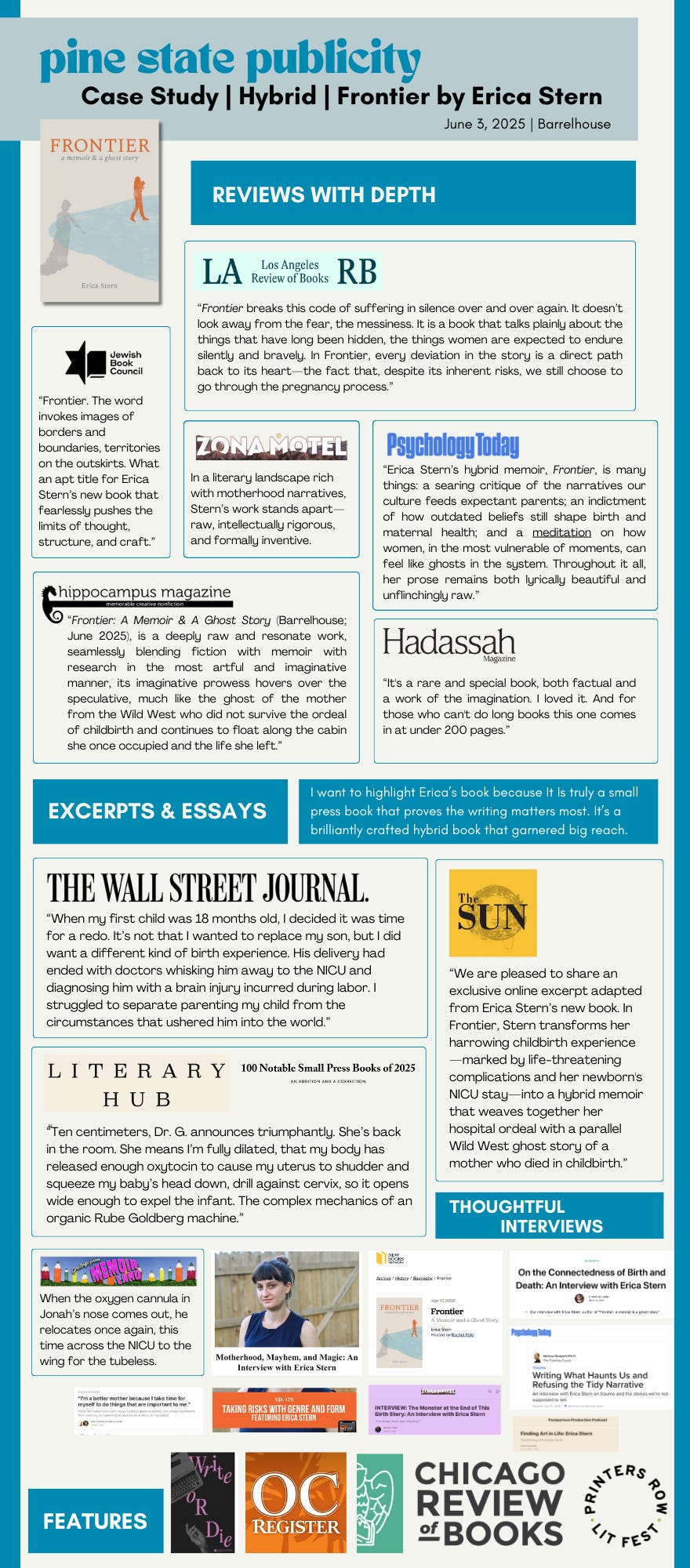
Good news! In the same universe as the “small batch,” New York Times Book Review does not sell in the same way it once did. We like to call our publicity strategy a “satellite approach” (I use this language in almost every proposal). Meaning that we’re not trying to get one big thing, or one specific thing, or even five specific things, we’re trying to hit multiple prongs of publicity, vertically and horizontally. I’m looking for the sprinkle cookie of publicity: a dash, a pinch, a sprinkle across media category, across media size, across audience, across community, across venue. I don’t want the sprinkle to ever just be legacy media or social media or bloggers. I want a healthy mix. Here’s a campaign I loved doing for Erica Stern’s Frontier A Memoir and a Ghost Story from Barrelhouse (she also got good local coverage for events (not listed) and was on several year-end lists).
And … now I have to go watch Stranger Things. Cheers, y’all!
As always, the Pine State calendar of events lives here, and you can buy our books here! You can also see what we’re working on and contact us through our website, Pinestatepublicity.com.
A review of Terese Svoboda’s HITLER AND MY MOTHER-IN-LAW appeared in the latest Air Mail, Editors at New Pages recommended Jehanne Dubrow’s THE WOUNDED LINE, Dubrow also has an essay related to trauma writing in the new issue of Rain Taxi, HOPE HOUSE by Joe Bond was excerpted in People Mag, Vol 1 Brooklyn featured a new excerpt from Burnside Soliel’s BERCEUSE PARISH, Michelle Gurule was profiled in the London Times for THANK YOU, JOHN, Austyn Wahlors HOT HOUSE BLOOM was read in The Millions Year in Reading, Cipher by Jeremy Jones is an Our State Magazine book club pick, Southern Literary Review chose Ashley M. Jones LULLABY FOR THE GRIEVING as their 2025 Book of the Year, Nicole Graev Lipson’s MOTHERS AND OTHER FICTIONAL CHARACTERS and Erica' Stern’s FRONTIER are both on the Chicago Review of Books best debuts list, and so much more on Twitter & Instagram.
Wonderful post, and also, your writing makes me think and laugh, which I think is not an easy thing to pull off. As a new subscriber, and I could probably find the answer to this in your profile but I'm in the comment section now and can't access it 😜, so I'll ask here: are you also an author? If not...why not? I'd read your book.
This is great. Sorry to just now be catching up to it, but very glad I did.